
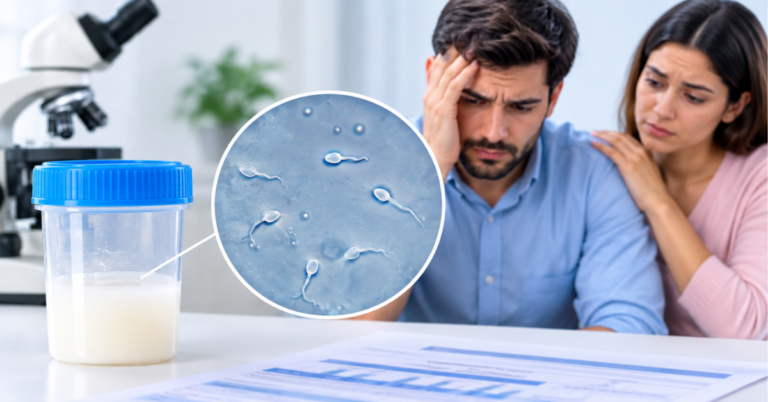
A semen analysis report provides important information about male reproductive health, including sperm count, shape, and movement. Sperm motility is particularly important because sperm need to move effectively to reach and fertilise an egg. Low sperm motility may reduce the chances of natural conception, but it does not necessarily mean that pregnancy is impossible.
1. What Is Sperm Motility?
Sperm motility refers to the ability of sperm to move. Healthy sperm movement helps sperm travel through the female reproductive tract towards the egg.
There are three main types of sperm movement:
- Progressive motility: Sperm move forward in a straight line or large circles.
- Non-progressive motility: Sperm move but do not travel forward effectively.
- Immotile sperm: Sperm show no movement.
Progressive movement is particularly important for natural fertilisation.
2. What Does Low Sperm Motility Mean?
Low sperm motility means that a smaller-than-expected percentage of sperm are moving effectively. This condition is medically known as asthenozoospermia.
According to WHO’s sixth edition laboratory manual (2021), the lower fifth percentile reference values are approximately 30% for progressive motility and 42% for total motility. These values are reference points, not absolute fertility boundaries.
A single abnormal semen analysis does not automatically confirm infertility. Results may vary, so repeat testing and clinical evaluation may be recommended.
3. What Causes Poor Sperm Motility?
Several factors can contribute to reduced sperm movement, including:
- Varicocele (enlarged veins around the testicles).
- Genital tract infections.
- Oxidative stress and cellular damage.
- Smoking and excessive alcohol consumption.
- Frequent exposure to excessive heat.
- Hormonal imbalances.
- Certain medications and medical conditions.
- Environmental and lifestyle factors.
Identifying the underlying cause helps guide appropriate treatment.
4. How Does Low Motility Affect Male Fertility?
When sperm cannot move forward effectively, reaching the egg becomes more difficult. This may reduce the chances of natural fertilisation.
However, men with low sperm motility can sometimes achieve natural pregnancy. Fertility also depends on sperm count, morphology, female reproductive health, and other factors.
5. Can Low Sperm Motility Be Improved?
Improvement depends on the underlying cause. Recommended measures may include maintaining a balanced diet, regular exercise, avoiding smoking, limiting alcohol, and reducing excessive heat exposure.
A fertility specialist may recommend treating infections, managing hormonal problems, or addressing varicocele when appropriate. Repeat semen analysis may help assess changes over time.
6. What Treatment Options Are Available?
Treatment depends on the couple’s complete fertility evaluation. Options may include medication for specific underlying conditions, intrauterine insemination (IUI), in vitro fertilisation (IVF), or intracytoplasmic sperm injection (ICSI).
During ICSI, a selected sperm is injected directly into an egg in a laboratory. It may be considered when sperm motility is significantly reduced or other fertilisation concerns exist. However, it is not necessary in every case of low motility.
A qualified fertility specialist can evaluate semen analysis findings, identify possible causes, and recommend suitable options. Consulting a specialist for ICSI Treatment in Indore can help couples understand whether this procedure or another fertility approach is appropriate for their individual circumstances.
FAQs
1. What is considered low sperm motility in a semen analysis?
Progressive motility below 30% or total motility below 42% is below the WHO 2021 lower reference values.
2. Can a man with low sperm motility father a child naturally?
Yes. Natural conception may still be possible, depending on overall sperm health and other fertility factors.
3. What are the common causes of poor sperm motility?
Varicocele, infections, hormonal problems, oxidative stress, smoking, and excessive heat exposure may contribute.
4. Can sperm motility improve naturally?
It may improve with healthier lifestyle habits, particularly when reversible lifestyle factors contribute to the problem.
5. Is ICSI helpful for men with low sperm motility?
Yes. ICSI can help overcome certain sperm movement-related fertilisation difficulties by injecting a selected sperm directly into an egg.
